
Protect Your Foundation: The Gutter Essential
Introduction: The Sound of Water That Shouldn’t Be There

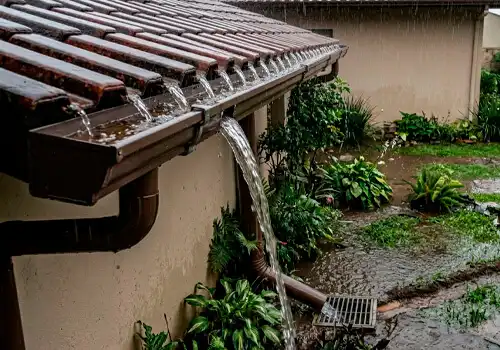
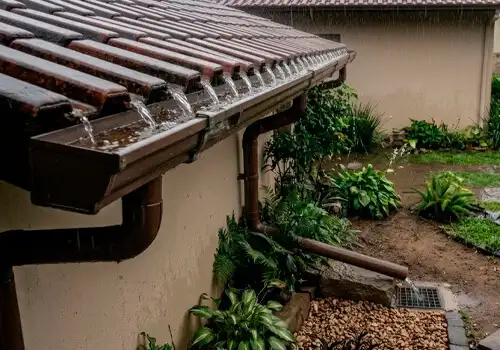
The forecast said scattered showers. Nothing unusual for an Atlanta afternoon. But within minutes, the gentle rain turns into a downpour, and you hear it: the unmistakable sound of water sloshing over the front edge of your gutters.
You look outside. The gutters are clean, you just had them cleared last month. Yet water is cascading down the side of your house, pooling around your foundation, and washing away the carefully maintained mulch beds. And somewhere deep down, you know this isn’t the first time.
For thousands of Atlanta homeowners, this scene plays out every storm season. The standard gutters that came with the house, or the basic ones installed by a handyman a few years ago, simply can’t handle what the city’s weather throws at them. But the problem isn’t just the rain. It’s a perfect storm of climate, soil, and installation that turns a minor inconvenience into a threat to your home’s foundation.
Why Standard Gutters Are Overmatched
Atlanta's Rainfall: Not What You Think
Most people assume Seattle is the rainiest city in America. They’re wrong. Atlanta receives approximately 50 inches of rain annually, over 13 inches more than Seattle. The US average is just 38.1 inches per year, meaning Atlanta gets nearly 30% more rain than a typical American city. But volume isn’t the only issue.
Atlanta’s rainfall tends to arrive in fewer but far more intense downpours. Spring and summer storms can easily dump more than 2 inches of rain in a single hour, overwhelming drainage systems designed for gentler, more consistent precipitation.
Between 1970 and 2024, the city experienced a 13.2% rise in hourly rainfall intensity, significantly increasing the risk of flash flooding. The National Oceanic and Atmospheric Administration (NOAA) now predicts Georgia will see 15–20% more flash floods by 2026 compared to 2020 levels.
Standard residential gutters, typically the 5-inch variety, were never designed for this new reality.
The Hidden Danger Beneath Your Feet
The rain itself is only half the problem. What lies beneath your lawn makes everything worse.
Atlanta is built on a thick layer of red clay soil, scientifically known as Cecil or Piedmont clay. This soil acts like a sponge, absorbing water during Georgia’s rainy spring and summer months and swelling significantly as it becomes saturated. When the hot, dry summer arrives, it shrinks and cracks, creating a constant cycle of expansion and contraction that puts immense pressure on foundations.
Clay soils are responsible for up to 80% of all foundation issues in the Southeast, including heaving slabs, bowed walls, and water intrusion. The soil’s poor permeability prevents water from soaking into the ground efficiently.
So when your gutters overflow, as standard systems frequently do, that water doesn’t just disappear. It pools around your foundation, saturates the clay, and triggers the expansion cycle that cracks basement walls, warps floors, and compromises your home’s structural integrity.
The Tree Canopy Factor
Atlanta is known as the “City in a Forest,” and for good reason. The city’s lush tree canopy is beautiful, but it presents a relentless challenge for gutter systems. Oak, pine, and maple trees shed leaves, twigs, and seed pods throughout much of the year, not just in autumn.
These debris accumulate quickly in gutters, creating blockages that force water to overflow even when the system itself is technically functioning.
Standard gutters, with their narrower channels and frequent seams, are particularly vulnerable to debris buildup. Once a few leaves lodge at a seam or corner, they act as a dam, trapping more debris and accelerating the clogging process.
The Technical Limitations of Standard Gutters
The 5-Inch Capacity Problem
The vast majority of residential homes in America are equipped with 5-inch gutters. This size is considered the industry standard. It works adequately for many homes in regions with moderate rainfall. But Atlanta is not a moderate-rainfall region.
Here’s the math: A standard 5-inch gutter holds approximately 1.2 gallons of water per linear foot. When rainfall intensity exceeds the system’s capacity, which happens regularly during Atlanta’s thunderstorms, water simply spills over the front edge. The gutter becomes a decorative trim piece rather than a functional drainage system.
Even more concerning, standard 5-inch gutters struggle with roof areas exceeding 1,800 square feet per downspout, particularly when the roof has a steep pitch. Steeper roofs accelerate water flow, causing it to shoot past the gutter channel entirely during moderate to heavy rainfall. For many Atlanta homes, this isn’t a rare occurrence, it’s a weekly event during spring and summer.
The Downspout Bottleneck
Capacity issues in the horizontal gutter channel are only part of the problem. The downspouts that carry water down to ground level are often equally undersized
Standard systems typically pair 5-inch gutters with 2-by-3-inch downspouts. This narrow pathway creates a bottleneck during heavy rain. Water backs up in the gutter, fills the channel beyond its capacity, and overflows before it ever reaches the ground.
Studies have shown that outlet openings smaller than 2 inches in diameter fail nearly every time during intense storms, while larger outlets succeed almost universally.
The Seam Vulnerability
Traditional sectional gutters are assembled from 10- to 20-foot prefabricated sections, snapped or sealed together at multiple joints. A typical home might have 15 to 20 such seams, each representing a potential failure point.
Every seam is vulnerable to expansion and contraction as temperatures fluctuate. Over time, the sealant cracks, water seeps through, and what should be a contained drainage system becomes a series of leaks dripping water directly against your home’s siding and foundation.
Seamless gutters, by contrast, have 70–80% fewer leak points because they’re fabricated from a single continuous piece of material on-site.
Improper Pitch and Fastener Failure
Even when gutters are properly sized, poor installation guarantees failure. The industry standard requires a slope of approximately one-quarter inch per 10 feet of gutter toward each downspout. This subtle pitch ensures water flows rather than pools.
But many standard installations get this wrong. Brackets placed too far apart cannot support the weight of water and debris, leading to sagging over time. Fasteners loosen, causing gutters to tilt away from the correct angle.
Water pools in the center rather than draining toward downspouts. The system that was marginal to begin with becomes completely ineffective.
The Real Cost of Gutter Failure
Foundation Damage
When gutters fail, water doesn’t politely evaporate. It pools around your foundation, saturates the expansive clay soil, and triggers the swelling cycle that cracks basement walls and compromises structural integrity. One Atlanta homeowner delayed gutter replacement and paid the price literally, a $3,000 foundation repair bill after a single heavy spring thunderstorm.
The statistics are sobering: 63% of home water damage is attributable to poor gutter installation or maintenance. Downspout positioning failures alone account for approximately 80% of gutter failures, leading directly to foundation erosion and structural damage.
Landscape Erosion and Basement Flooding
Overflowing gutters don’t just damage what’s underneath your home, they destroy what’s around it. Water cascading over the sides erodes soil from flower beds, exposes plant roots, and displaces mulch and gravel. In older neighborhoods like Grant Park, Kirkwood, and East Atlanta, where many homes are built on clay-heavy soil that drains slowly, the problem is particularly acute.
Basement flooding is another common consequence. When downspouts deposit water too close to the foundation, or when gutters overflow entirely, hydrostatic pressure forces water through basement walls and floors. What begins as a gutter problem becomes a basement waterproofing crisis.
The Hidden Costs of Constant Maintenance
Homeowners with inadequate gutter systems find themselves cleaning them constantly, sometimes several times per season, because narrow channels cannot flush debris through fast enough. This isn’t just an inconvenience. Gutter cleaning services in Atlanta typically charge $50 to $90 per hour
Over several years, these recurring costs add up to significantly more than the upfront difference between standard and professional-grade installation.
What Professional Grade Installation Actually Means
Inch Gutters: Not Overkill, But Insurance
Professional-grade gutter systems in Atlanta typically start with 6-inch gutters rather than the standard 5-inch variety. The difference in capacity is dramatic: a 6-inch gutter holds nearly 2 gallons of water per linear foot, a 67% increase from the 1.2 gallons held by a 5-inch system
Think of it this way: a 5-inch gutter is a two-lane road. A 6-inch gutter is a four-lane highway. Both get you where you need to go. But when traffic is heavy, when rain is coming down at 2 inches per hour, that extra capacity is the difference between water contained and water overflowing
For homes with large roof surfaces, steep pitches, or long uninterrupted runs exceeding 40 to 50 feet, the upgrade to 6-inch gutters isn’t optional, it’s essential
Paired With 3-by-4-Inch Downspouts
Professional installation doesn’t stop at wider gutters. It pairs them with appropriately sized downspouts, typically 3 by 4 inches rather than the standard 2 by 3 inches. This larger outlet diameter eliminates the bottleneck that causes backups during heavy rain.
The combination of 6-inch gutters and 3-by-4-inch downspouts moves substantially more water with less tendency to choke at the outlet.
Seamless Fabrication on Site
Professional-grade systems are seamless, custom-fabricated on-site using a portable roll-forming machine. The installer measures your roofline precisely, feeds flat aluminum coil into the machine, and extrudes a continuous gutter channel in one unbroken piece.
The result is a system with only 4 to 6 joints per home, at corners and downspout outlets, compared to the 15 to 20 joints in a sectional system
Fewer seams mean fewer leaks. Fewer places for debris to catch. Fewer opportunities for sealant to crack and fail. Professional-grade aluminum seamless gutters typically last 20 to 30 years with proper maintenance, compared to the much shorter lifespan of sectional systems.
Precise Pitch and Fastener Spacing
Professional installation ensures correct slope, typically one-quarter inch per 10 feet of gutter toward each downspout. Brackets are spaced appropriately to support the weight of water and debris without sagging
Hidden hangers secure the gutter to the fascia board without exposed fasteners that can loosen over time. The entire process, for a standard single-story home, typically takes 4 to 8 hours, but those hours make the difference between a system that works for decades and one that fails within years.
What Professional Grade Installation Costs in Atlanta
Breaking Down the Numbers
Professional gutter installation in Atlanta is priced per linear foot, with costs varying by material, home height, and roofline complexity. Here is what you can expect to pay for professional-grade installation in the Atlanta market as of 2025:
| Material Type | Estimated Cost (Installed/ft) |
|---|---|
| Vinyl (Economy) | $5 – $8 |
| Seamless Aluminum (Most Popular) | $7 – $12 |
| Galvanized Steel | $10 – $18 |
| Premium Copper | $25 – $40+ |
Most Atlanta homeowners invest $1,500 to $2,500 for a complete professional-grade aluminum seamless gutter system with guards. Labor typically accounts for $2 to $4 per foot for a standard single-story home, though multi-story or complex rooflines can push labor costs closer to $10 per foot.
The Long-Term Value Calculation
Professional-grade seamless gutters typically cost 30 to 50% more upfront than standard sectional systems. But over a 10-year period, the total cost of ownership is comparable, and often lower, once you factor in fewer repairs, less maintenance, and no foundation damage.
Consider this: foundation repair in Atlanta frequently exceeds $10,000 for significant structural work. Landscape restoration costs thousands more. Replacing rotted fascia boards and water-damaged siding adds to the tally. A $2,000 investment in professional-grade gutters looks remarkably inexpensive compared to $15,000 in downstream repairs.
Material Recommendations for Atlanta's Climate
- Aluminum is the most common and recommended material for Atlanta homes. It offers excellent humidity resistance, a lifespan of 20 to 30 years, and a reasonable installed cost of $8 to $12 per foot.
- Copper provides outstanding durability lasting 50 years or more, but at a significantly higher investment of $25 to $35 per foot.
Vinyl is the least expensive option at $4 to $8 per foot, but it typically lasts only 10 to 15 years in Georgia’s humid subtropical climate and is not recommended for professional-grade applications.
The Bottom Line Invest Now or Pay Later
Material Recommendations for Atlanta's Climate
Standard gutters are not inherently bad. For a home in a dry climate with sandy soil and few trees, they work perfectly well. But Atlanta is none of those things. It’s a city defined by intense rainfall, expansive clay soil, and a dense tree canopy.
Standard gutters, installed by generalists rather than specialists, fail in this environment not because they’re defective, but because they were never designed for the demands placed upon them.
Every time water spills over the edge of an undersized gutter, it’s not just water. It’s a slow-acting acid eating away at your foundation, your landscaping, and your home’s value. The question isn’t whether your gutters will fail, it’s how much damage they will cause when they do.