

- By Solify Gutters
- Uncategorized
- 0 Comment
How to Choose Gutter Guards: A Homeowner’s Guide for the South
Introduction: That Saturday Morning Surprise

It happens every spring without fail. You brew your coffee, step onto the back deck to admire how green everything looks, and then you spot them, the gutters. They’re overflowing with a soggy, half-decomposed mix of last autumn’s leaves and this season’s pollen sludge.
A tiny sapling is even sprouting from the downspout. You sigh, drag out the ladder, and spend the next three hours scooping gunk you’d rather not name.
If that scene feels painfully familiar, you’re not alone. In our humid, tree-rich corner of the Southeast, gutters work overtime. The real question isn’t if they’ll clog, it’s how much damage will happen before you notice.
This guide will walk you through everything you need to know about gutter guards: what they are, how they work, which type might suit your home, and the honest truth about maintenance after installation. Think of it as a crash course in reclaiming your weekends and defending your home’s foundation.
Why Your Gutters Matter More Than You Think
Gutters are the unsung heroes of your home’s exterior. Their job is deceptively simple: channel rainwater away from the roof, walls, and foundation. When they work, you forget they exist. When they fail, the consequences stack up fast.
- Foundation issues: Overflowing water pools around the base of your home, causing cracks and settling over time.
- Basement and crawl space flooding: Excess moisture seeps in, inviting mold and musty odors.
- Fascia and soffit rot: Trapped water rots the wooden boards behind your gutters, leading to expensive repairs.
- Landscape erosion:Uncontrolled downpours wash away mulch, soil, and your favorite plants.
- Pest infestations:Standing water in clogged gutters is a mosquito breeding ground, and damp debris attracts carpenter ants, roaches, and even rodents.
In a region known for sudden, heavy afternoon thunderstorms, a properly functioning gutter system isn’t just a nice-to-have, it’s a frontline defense for your entire property.
The Unique Challenge Right Outside Your Window
Anyone who has lived here for more than a year knows the seasonal rhythms that wreak havoc on gutters.
Spring blankets everything in a fine yellow-green pollen dust that hardens into a concrete-like paste when it rains. Next come the helicopter seeds and catkins that float through the air in clouds.
Summer brings violent thunderstorms, often dumping an inch or two of rain in under an hour. Gutters have to handle a tremendous volume of water, and even a partial clog can cause dramatic overflow.
Autumn is beautiful but relentless. Mature oaks, maples, and sweetgums carpet roofs with broad leaves and spiky sweetgum balls. Pine trees, our signature evergreens, drop needles year-round, and those slender needles slip past many basic gutter guards, forming dense mats inside the channel.
Winter might seem quiet, but freeze-thaw cycles turn trapped debris into ice dams that can force water under shingles.
This combination of heavy rain, sticky pollen, and fine debris means the choice of gutter guard here isn’t just about convenience, it’s about finding a system specifically designed to handle our regional cocktail of organic matter.
What Exactly Is a Gutter Guard?
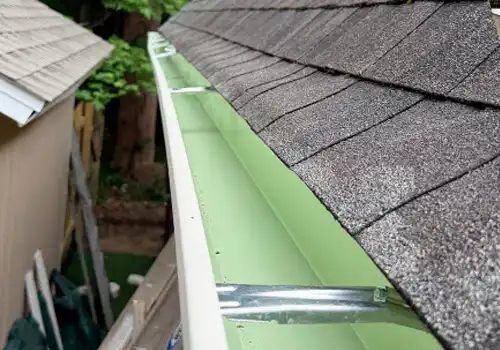
A gutter guard, sometimes called a leaf guard or gutter cover, is any system installed on top of or inside your gutters to allow water in while keeping debris out. The goal is simple: reduce or eliminate the need to manually clean your gutters while ensuring water flows freely to the downspouts.
But don’t let the simplicity fool you. The effectiveness of a gutter guard depends entirely on its design, the material it’s made from, and how well it matches the specific tree cover and rainfall patterns surrounding your home.
The Main Types of Gutter Guards (And How They Perform Locally)
Not all gutter guards are created equal. Understanding the differences will help you make an educated decision and avoid expensive mistakes. Here are the most common categories, with an honest look at how they hold up against our southern climate.
1. Micro-Mesh Guards
These consist of a fine stainless steel or aluminum mesh stretched over a frame. The openings are incredibly small, typically between 50 and 400 microns, allowing only water and very fine particles through.
Pros: Excellent at blocking pine needles, pollen clumps, and shingle grit. When properly pitched, they use water surface tension to guide rain into the gutter even during heavy downpours.
Cons: Extremely fine mesh can trap debris on top, requiring occasional brushing. Cheaper micro-mesh products may have plastic frames that warp in our summer attic heat.
Local Verdict: For homes surrounded by pine trees and heavy pollen, this is often the top performer, provided the mesh pore size is small enough (look for 50–100 microns for pollen).
2. Perforated Screen Guards
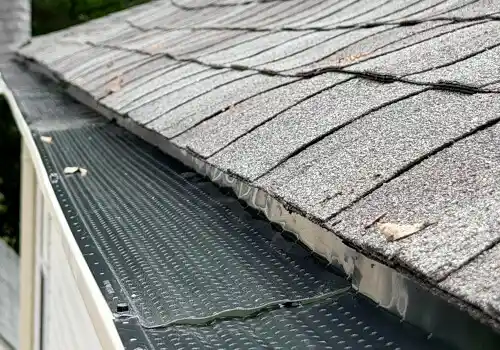
Flat or slightly curved metal or plastic sheets with holes punched in them. They snap or screw onto the gutter.
Pros: Affordable and widely available. Easy to install as a DIY project.
Cons: Holes are large enough to let pine needles, small seeds, and pollen through. Debris often gets trapped in the holes, blocking water entry. In our climate, they can become a sieve for fine particulates, creating a sludgy paste underneath.
Local Verdict: A budget option that works reasonably well for homes with only large leaves, but it struggles against our region’s fine, persistent debris.
3. Reverse Curve (Surface Tension) Guards
A solid, curved hood that directs water downward over a lip while leaves slide off the edge.
Pros: Effectively blocks large leaves and heavy debris. No holes to clog with pollen or grit.
Cons: High water volume from intense thunderstorms can shoot right over the edge, especially on steep roofs. In heavy downpours, you might see waterfalls cascading over the front. They are also the most expensive option and often require professional installation that involves lifting the first row of shingles, which can affect roof warranties.
Local Verdict: Can work for simple ranch-style homes with large leafy trees, but our seasonal deluges may overwhelm them, and the installation complexity demands a trusted, experienced contractor.
4. Foam Inserts
Triangular or cylindrical foam pieces pushed directly into the gutter channel.
Pros: Inexpensive and incredibly easy to install. Water soaks through the open-cell foam.
Cons: They degrade quickly under UV rays and our punishing summer sun, becoming brittle and collapsing. Pollen and shingle grit clog the foam pores, turning the insert into a soggy, non-functioning sponge that holds moisture against the gutter. Over time, they can harbor mold and even allow plants to root directly in the foam.
Local Verdict: Rarely a lasting solution here. Consider it a very temporary fix, not a long-term investment.
5. Brush Guards
Giant bristle brushes that sit inside the gutter, trapping debris while water flows around them.
Pros: Quick and cheap.
Cons: Pine needles and fine pollen embed themselves in the bristles, creating an impenetrable dam. Cleaning them means pulling out a mucky, muddy brush, a job almost as unpleasant as cleaning uncovered gutters.
Local Verdict: Our pollen and pine straw make these a frustrating choice that requires frequent maintenance.
Life After Gutter Guards: What to Expect
Once a high-quality, well-matched guard system is installed, you’ll notice several changes around your home.
- Ladder stays in the garage. That twice-a-year ritual of mucking out trenches becomes a quick ground-level check of the downspouts.
- Landscaping stays put. The flowerbeds below the roofline stop washing away during storms.
- Pest pressure drops. Without standing water and damp organic matter, mosquito and insect activity around the roofline noticeably decreases.
- Gutters last longer. By preventing heavy, waterlogged debris from sitting in the channels, guards reduce rust and seam stress, extending the life of your gutters.
You will, however, need to schedule a simple visual inspection roughly once a year, ideally in late spring after pollen season has peaked. Look for any matted pollen on micro-mesh surfaces or any section that appears to be sagging. Most of the time, a garden hose with a spray nozzle is all you need to restore peak performance.
A Final Thought
Our homes are surrounded by a stunning, lush landscape that demands a lot from our gutters. Pollen, pine straw, heavy rain, and relentless summer heat create a perfect storm of debris and moisture.
Gutter guards aren’t a magic cure-all, but when you match the right technology to the specific challenges in your backyard, they become a game-changing investment in both your time and your home’s longevity.
Take a walk around your house this weekend, look up at the roofline, and ask yourself: What’s really waiting inside my gutters right now? The answer will tell you everything you need to know about your next move.